How Often Should You Pressure Wash Your House?

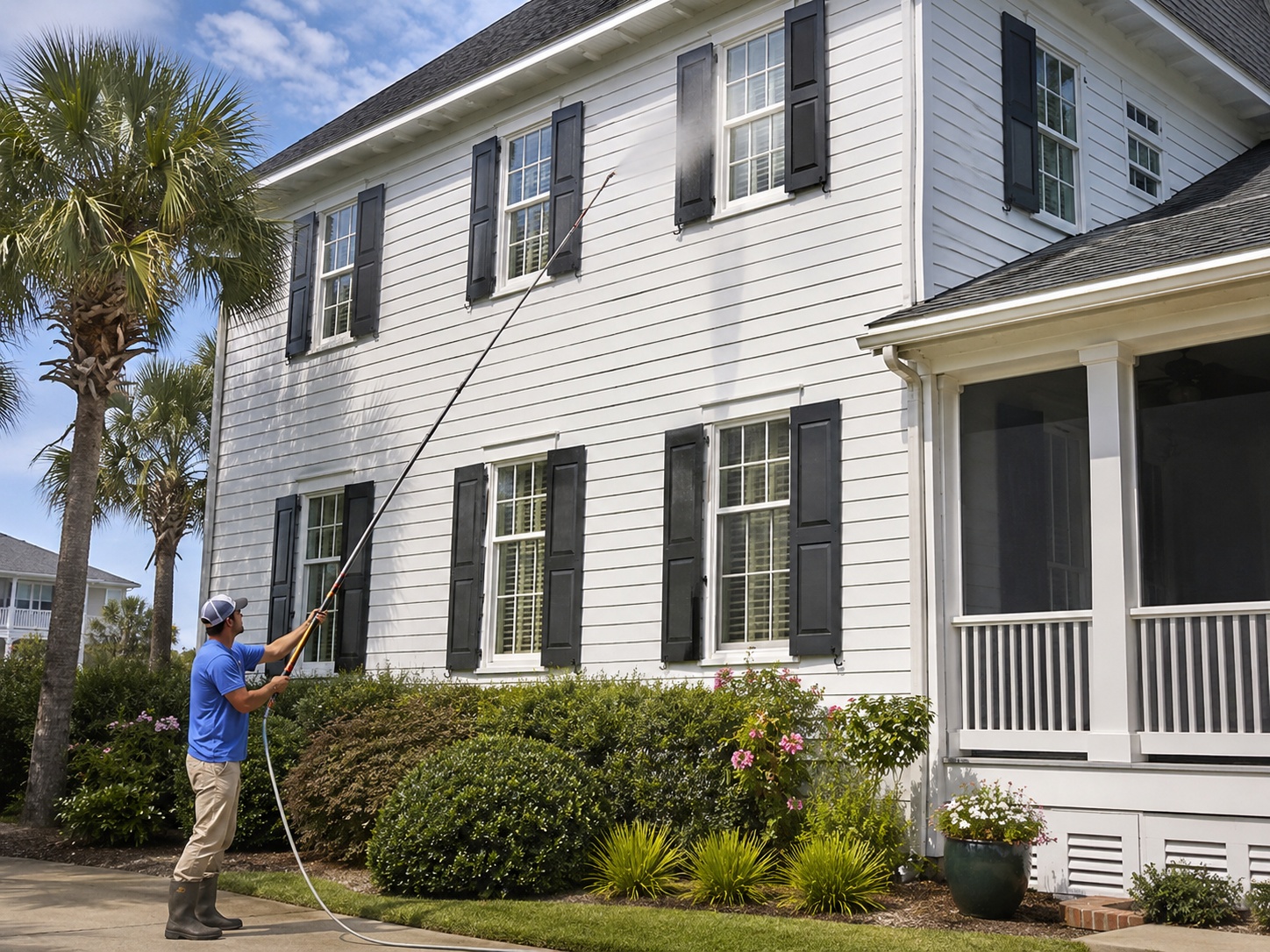
Technician pressure washing the siding of a two-story home with an extension wand

Pressure washing isn’t something most homeowners think about until their driveway looks dingy or their siding starts showing streaks. But waiting for obvious signs isn’t always the best approach — and neither is following a strict once-a-year rule that ignores your specific property. Here’s a straightforward answer, plus what actually determines how often your house needs it.

The Short Answer

For most homes, pressure washing about once a year is a reasonable starting point. That said, “once a year” is really just an average — some homes need attention every six to eight months, while others can comfortably wait longer. The real answer depends on your specific property: how much shade it gets, how close it is to water, how much tree cover surrounds it, and what kind of surfaces you’re dealing with.

Signs Your House May Need Cleaning Sooner

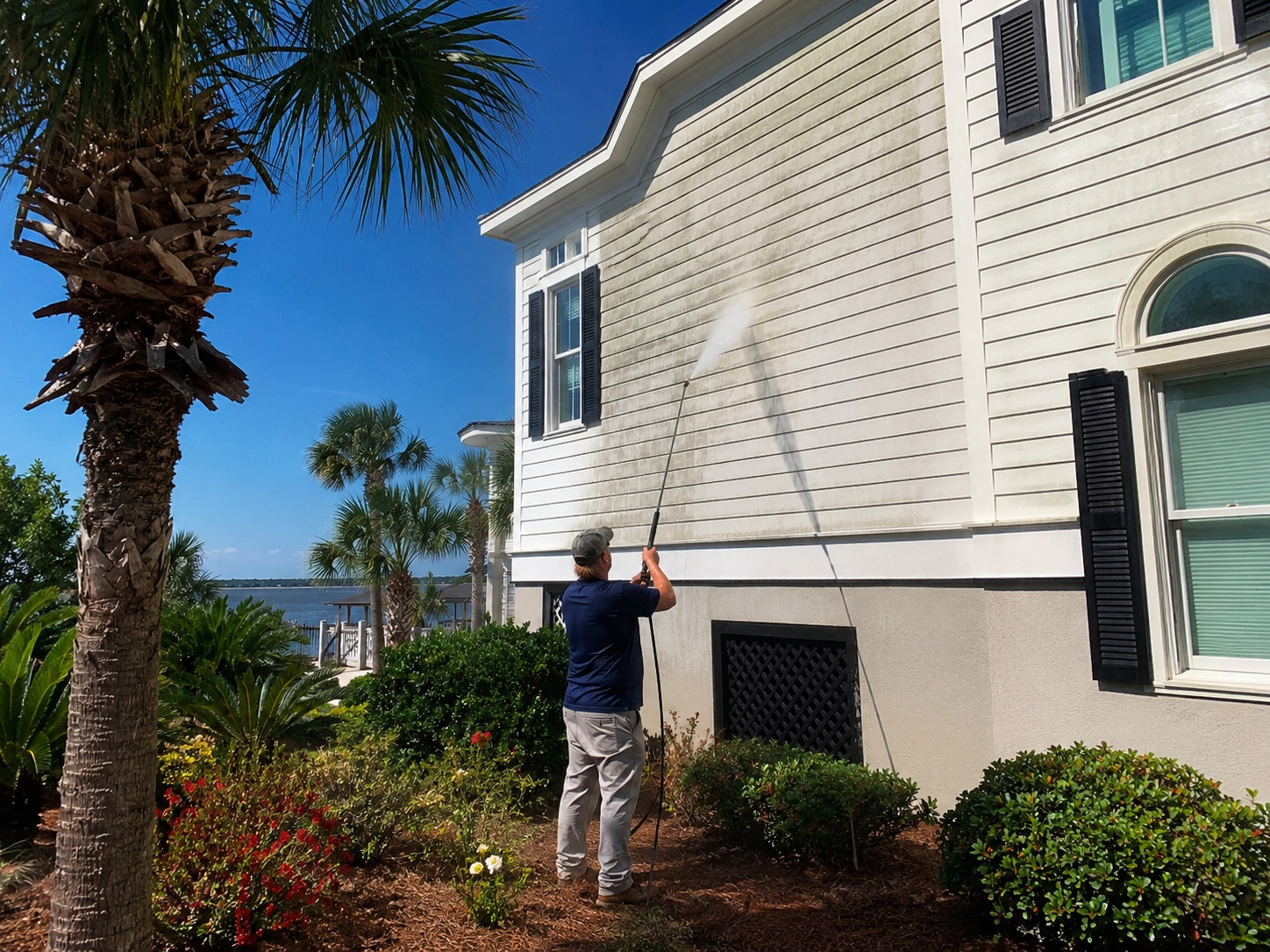
  • Dark streaks or stains on siding or concrete
  • Green or black algae, especially in shaded spots
  • A driveway that looks dull, blotchy, or discolored compared to when it was installed
  • Siding that looks dingy even right after rain
  • A mildew smell around exterior walls or under eaves
  • Visible mold near downspouts, gutters, or shaded corners

If you’re noticing any of these, it’s worth requesting a quote regardless of when your home was last cleaned — waiting for a “scheduled” cleaning date isn’t necessary.

What Affects Pressure Washing Frequency

A few factors tend to matter more than anything else. Climate and humidity play a big role — homes in consistently humid areas tend to develop algae and mildew faster than homes in drier climates. Shade and tree cover matter too: a heavily shaded yard holds moisture longer, which speeds up organic growth on siding and walkways. And if you’re near the coast, salt air and blowing sand can accelerate buildup on driveways and exterior surfaces in ways that inland homes simply don’t experience.

None of these factors mean your home needs cleaning on a fixed schedule — they just help explain why two similar-looking homes in different locations might need very different timelines.

Surfaces That May Need Attention

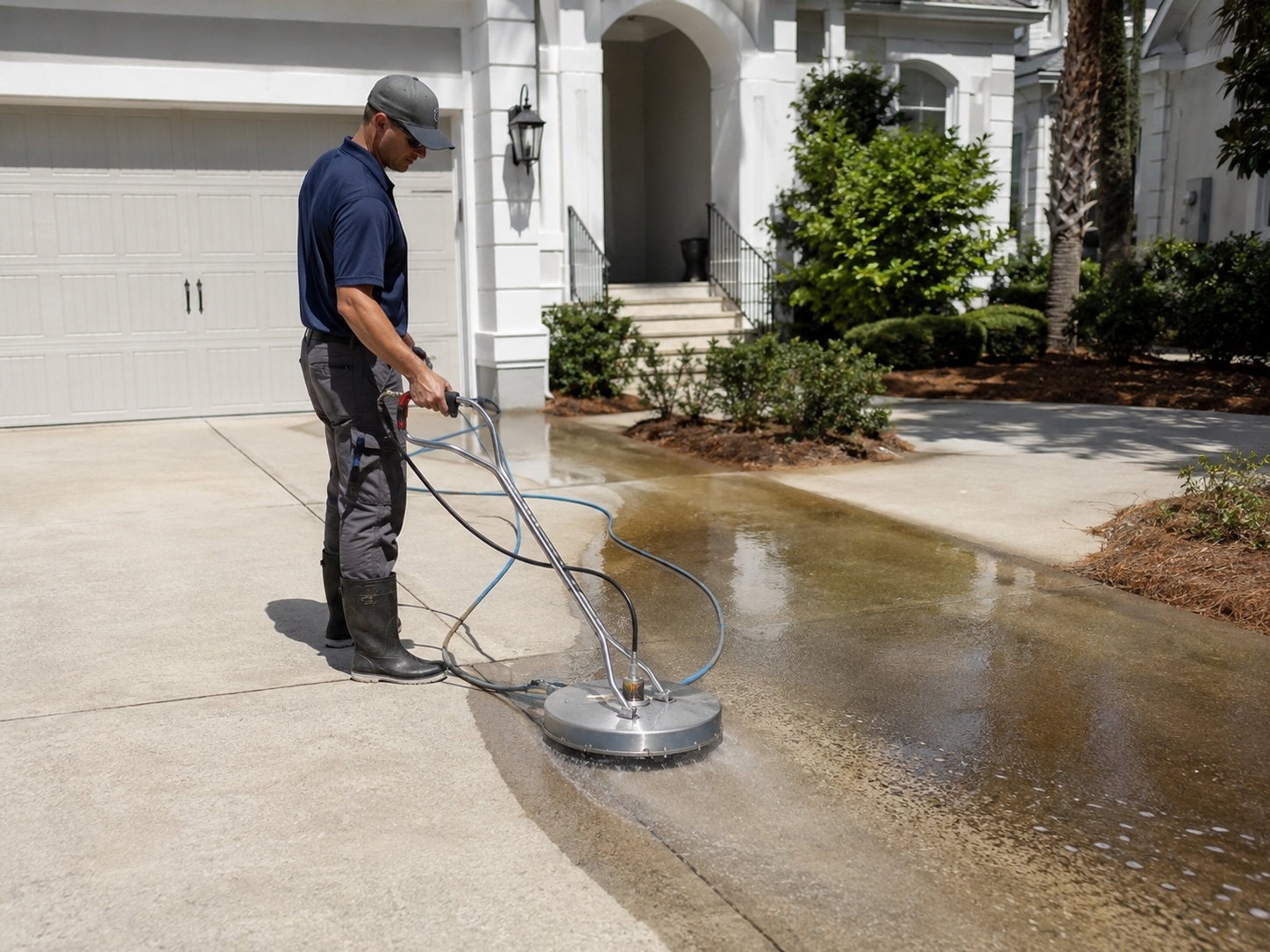
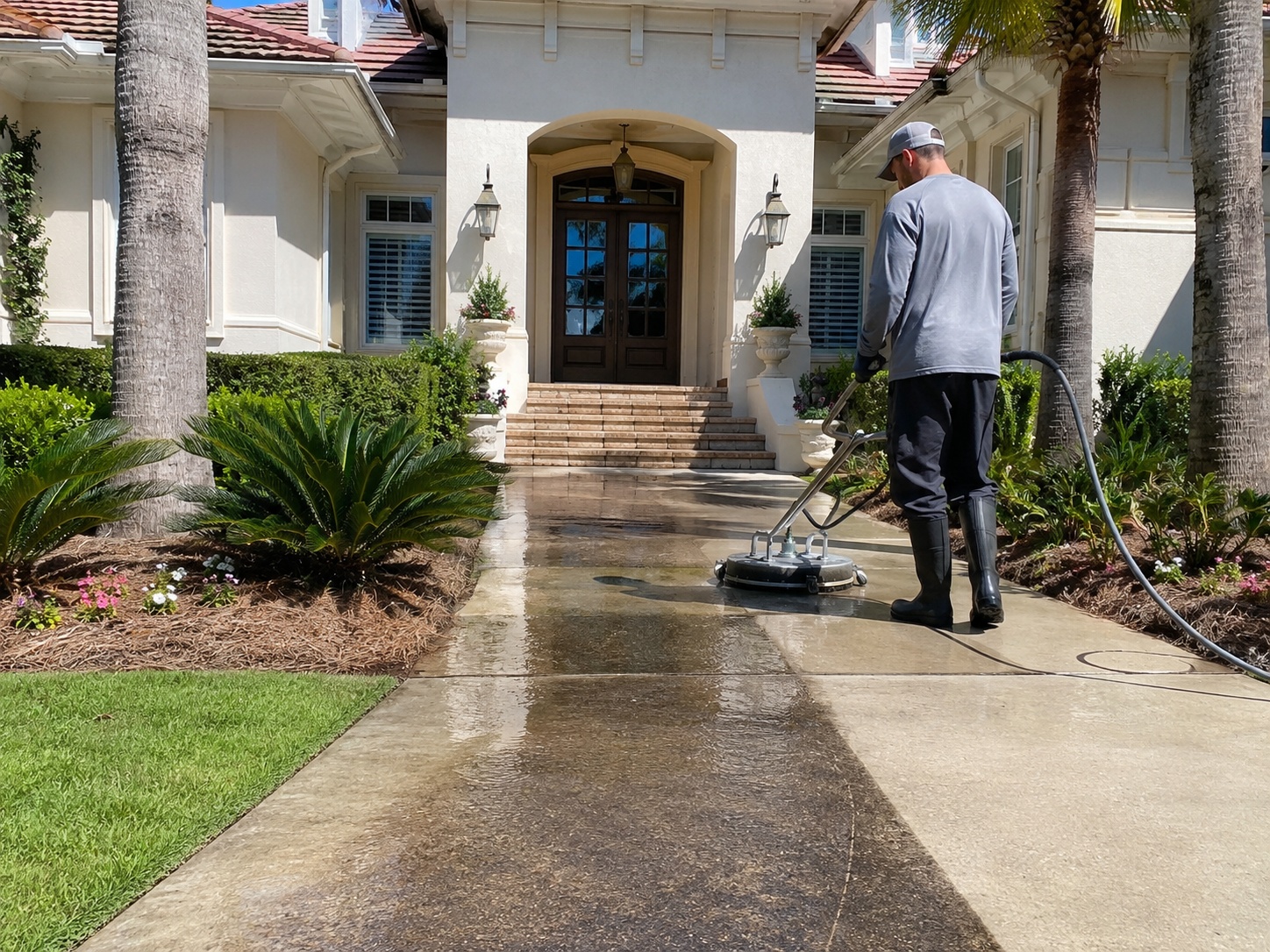
Not every surface should be treated the same way. Durable surfaces like concrete driveways and walkways can usually handle higher pressure and tend to show buildup first. Siding, painted trim, and older brick are more delicate and often need a lower-pressure, more careful approach to avoid damage. Patios, porches, and fences fall somewhere in between, depending on the material.

When to Get Help Instead of Waiting

If buildup is left unaddressed for a long time, it’s not just a cosmetic issue. Persistent moisture and organic growth on exterior surfaces can contribute to mold and mildew problems, which the EPA notes can affect both your home and indoor air quality if it spreads. If you’re seeing consistent green or black growth, especially somewhere shaded or damp, it’s generally better to address it sooner rather than let it spread.

Not Sure If It’s Time?

The easiest way to find out is to request a fast, no-pressure online quote. Tell us what you’re seeing, upload a few photos if you can, and we’ll follow up with an honest answer — no phone call required.

If you’re in the Myrtle Beach area, see our Myrtle Beach pressure washing page. If you’re in Conway, SC, our Conway pressure washing page covers the same for that area. Not sure which applies to you? Just reach out and we’ll help.

Frequently Asked Questions

Can I pressure wash too often?

It’s possible, especially on delicate surfaces. Cleaning too frequently at high pressure can wear down siding, paint, or mortar over time. Matching the frequency and pressure to the surface matters more than cleaning as often as possible.

Does pressure washing prevent mold from coming back?

It removes existing growth, but it doesn’t permanently prevent it from returning — especially in shaded, humid areas. Regular attention tends to keep it more manageable over time.

How do I know if my siding can handle pressure washing?

Most siding can be cleaned safely with the right technique, but older, painted, or more delicate siding often needs a lower-pressure approach. A surface-aware cleaning method matters more than raw pressure.