Yes, pressure washing can be safe for vinyl siding — but only within a fairly narrow range of pressure, distance, and technique. The risk isn’t the water itself, it’s using too much pressure, holding the wand too close, or spraying at the wrong angle. A gentler, lower-pressure approach (often called soft washing) is generally the safer default for siding.
Vinyl siding is durable, but it isn’t indestructible. Homeowners researching this question are usually trying to answer one of two things: “will this damage my siding?” or “why did my neighbor’s house get dented/streaked/discolored after a cleaning?” Both concerns come down to the same handful of variables. Here’s what actually determines the risk, what can go wrong, and how a gentler approach compares to a high-pressure one.
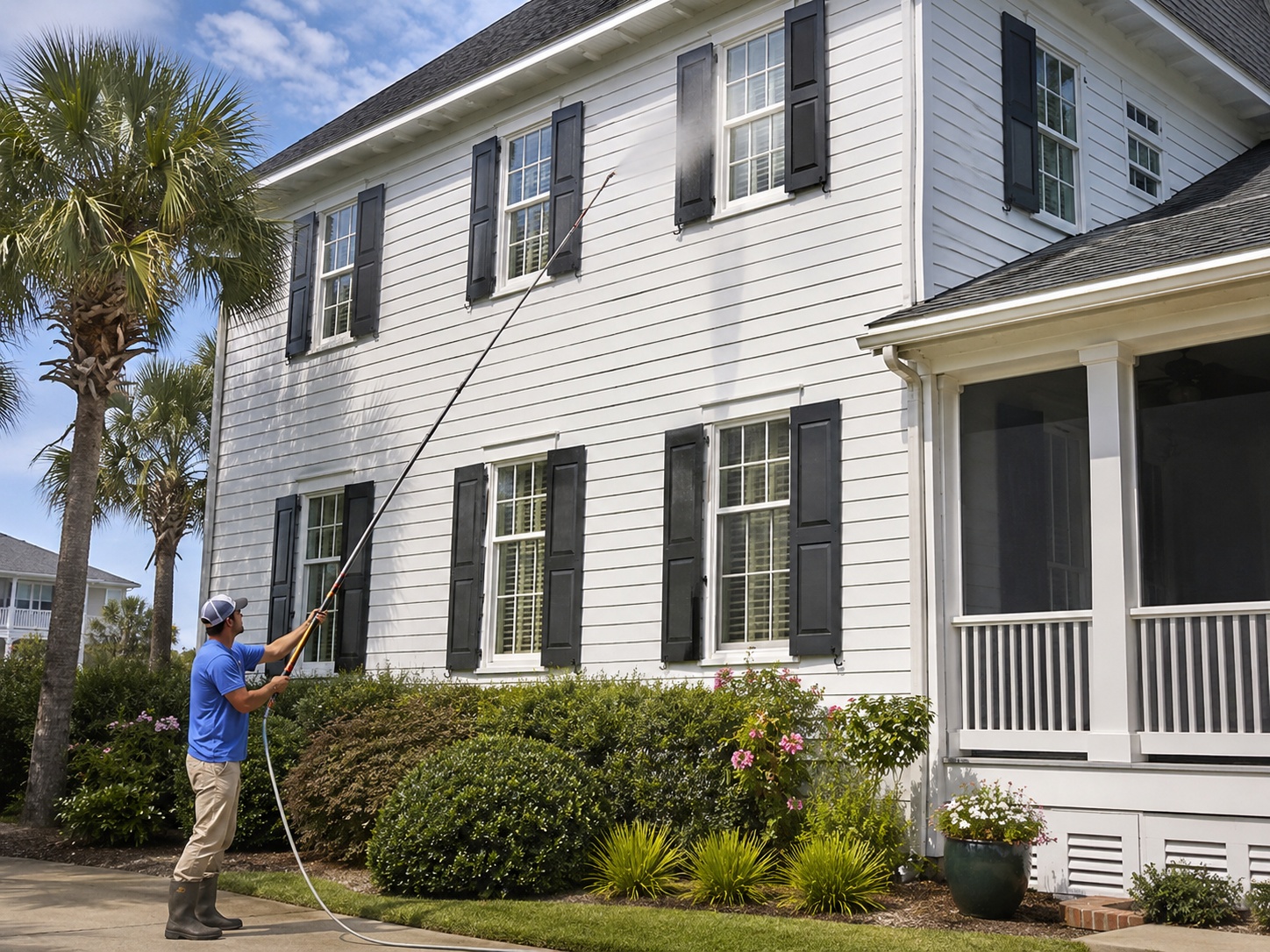
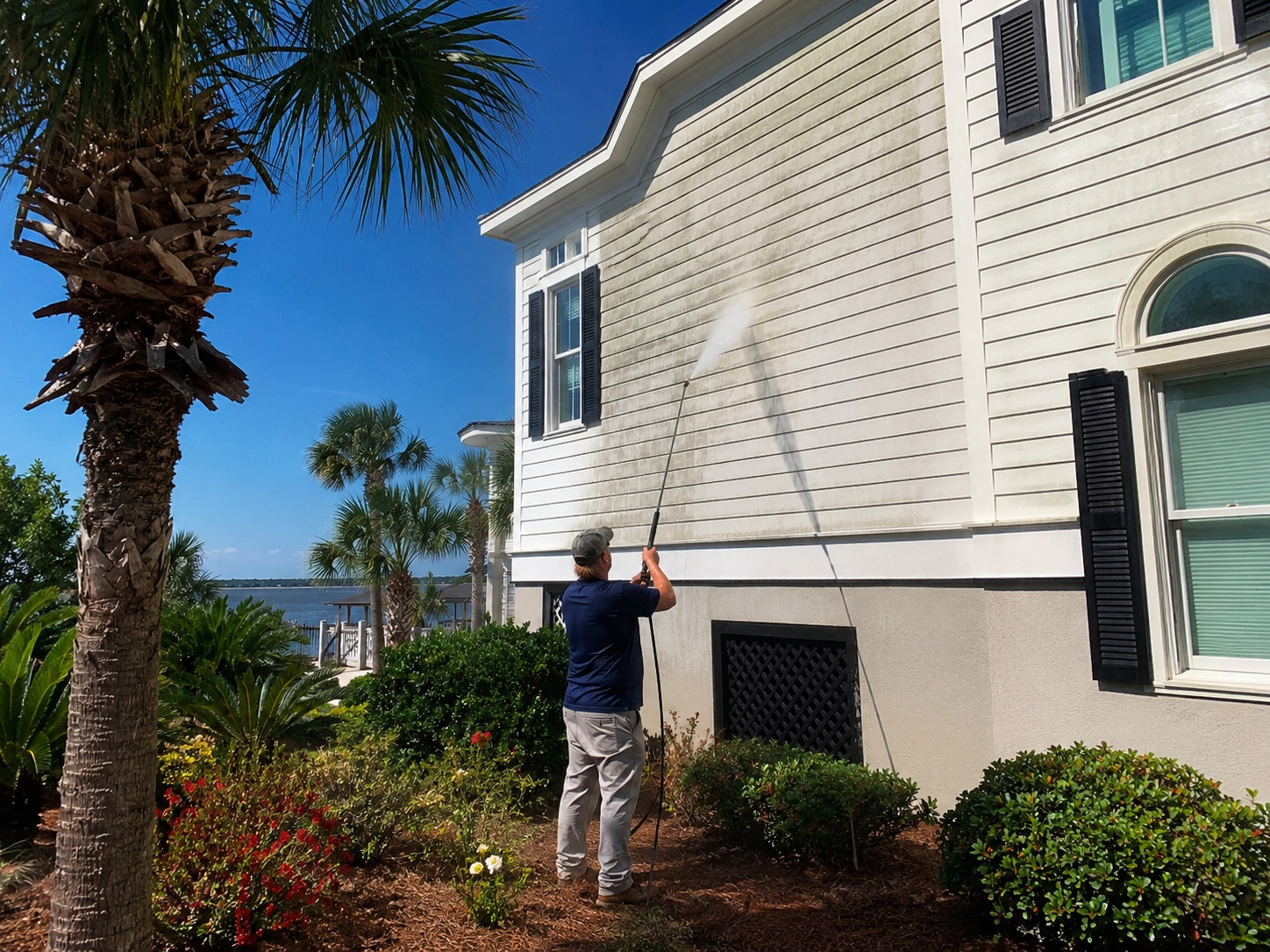
Cleaning vinyl siding is generally considered safe when the pressure is kept moderate, the spray is aimed level or slightly downward (not up under panels), the wand stays a reasonable distance from the surface, and openings like windows, vents, and outlets are treated carefully. Under those conditions, a wash is unlikely to cause damage — it’s largely a matter of matching the method to the material rather than avoiding cleaning altogether.
A handful of variables account for almost every vinyl siding cleaning problem:
Here’s how the two general approaches compare for vinyl siding specifically:
| Factor | High-Pressure Approach | Gentler / Soft-Wash Approach |
|---|---|---|
| Typical pressure | Higher PSI, closer to what’s used on concrete | Lower PSI, paired with a cleaning solution |
| Water intrusion risk | Higher, especially near seams and openings | Lower — less force means less chance of pushing water behind panels |
| Risk of panel damage | Higher — cracks, dents, or stripped finish are more likely | Lower — gentler contact reduces physical stress on panels |
| Effectiveness on algae/mildew | Removes buildup by force | Cleaning solution helps lift buildup before rinsing |
| Best suited for | Concrete, driveways, durable hard surfaces | Siding, painted surfaces, more delicate exterior materials |
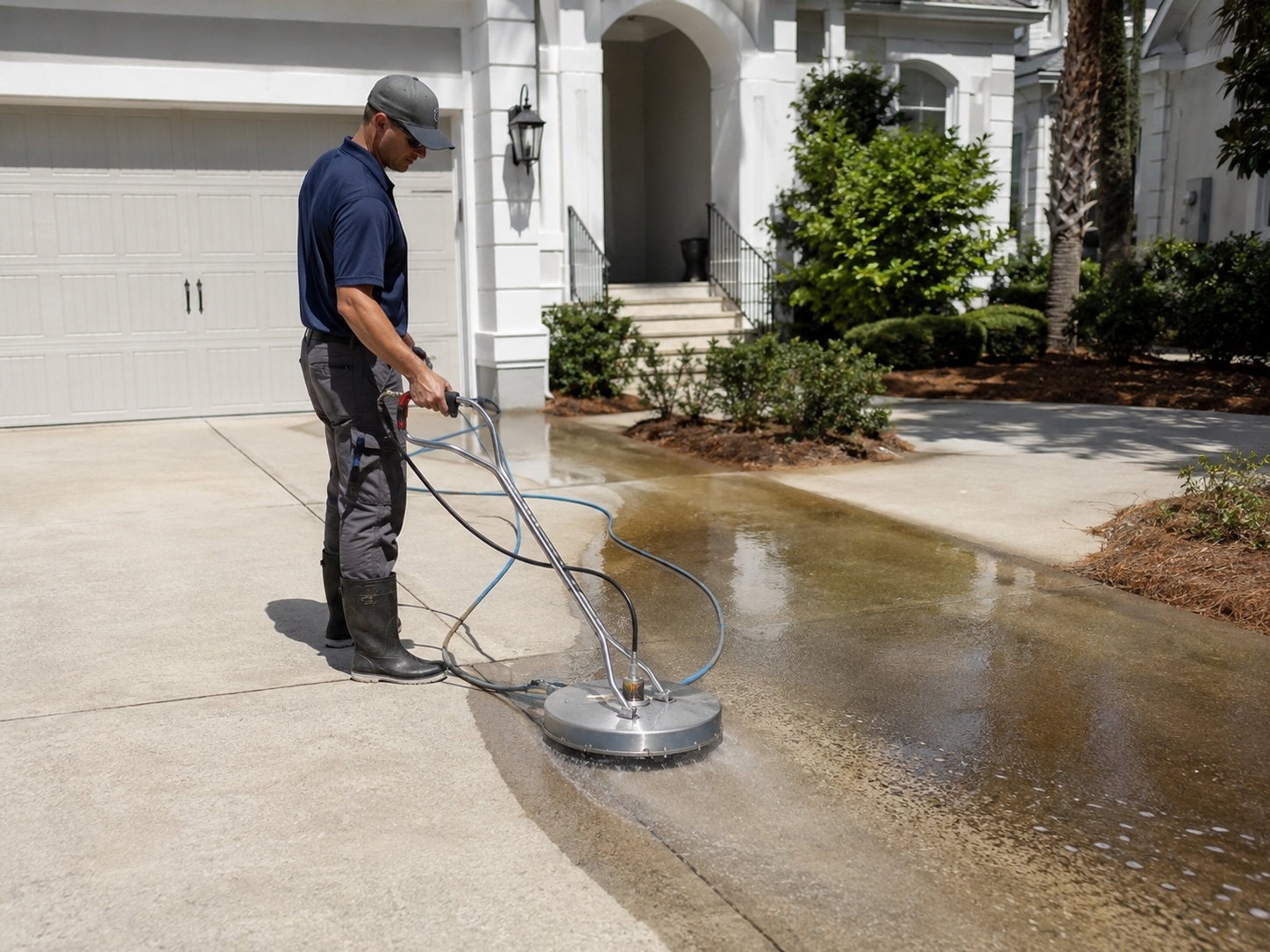
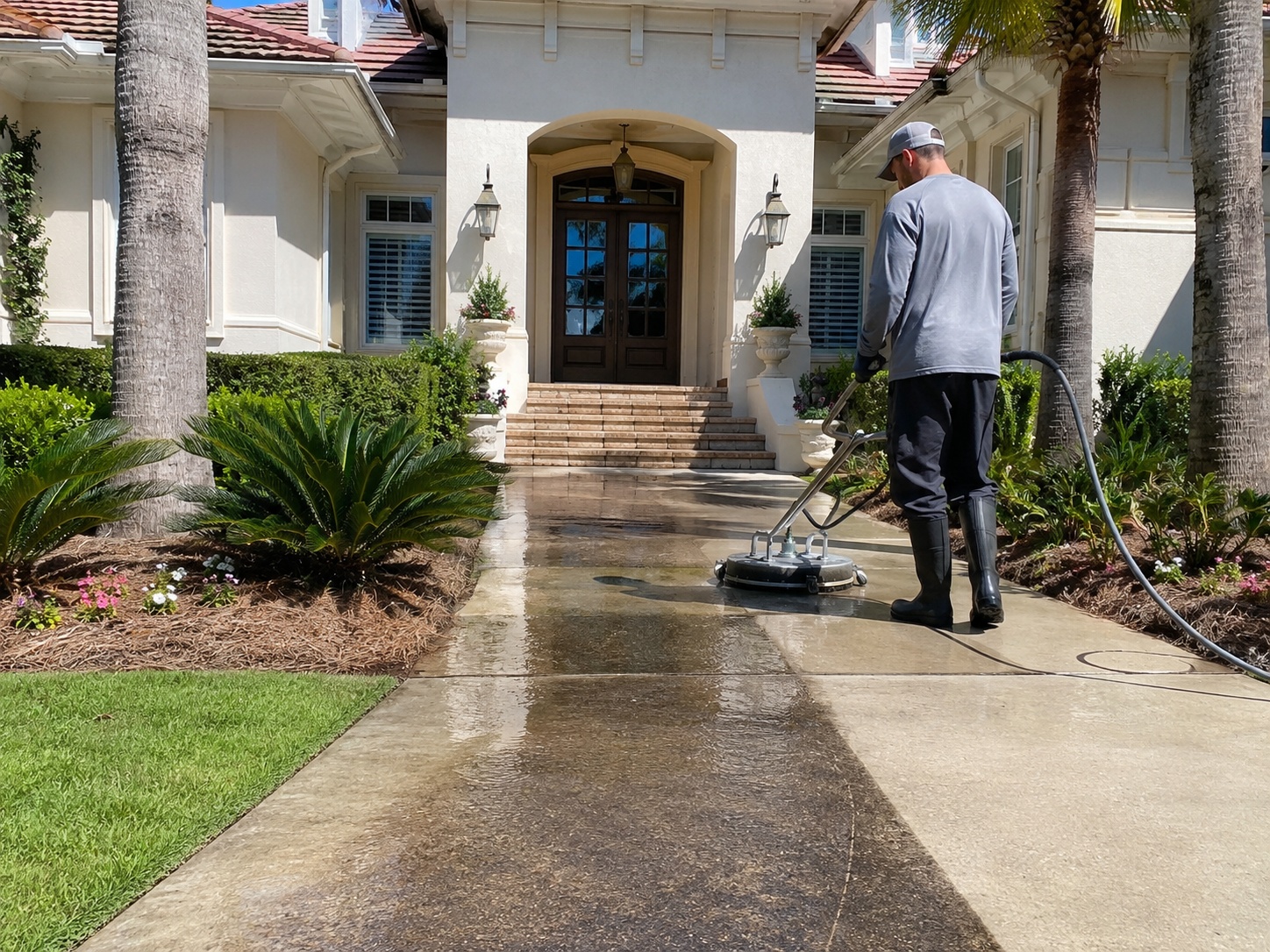
Neither approach is universally “better” — the point is matching the method to the surface. Concrete can generally handle higher pressure; siding generally can’t.
If you’re unsure about any of these, sending a few photos with your quote request is the easiest way to get an honest read before anything is scheduled.
If your siding is older, already shows cracking or gaps, or you’re simply not confident matching pressure and technique yourself, it’s reasonable to bring in someone experienced rather than experimenting with a rented pressure washer. According to the Vinyl Siding Institute, some manufacturers don’t recommend power washing at all, while others set specific PSI limits — so checking your siding’s care guidance (or having a professional check it for you) is worth doing before a full wash. If you’re in the Myrtle Beach area, our House Washing in Myrtle Beach page covers the surface-aware approach we use for siding specifically.
Send a few photos of your siding and Budget Boss can help you figure out whether a gentler approach makes sense — no phone call required.
See our House Washing in Myrtle Beach page, or read What Is Soft Washing and When Should You Use It? for a deeper look at the gentler approach. Not sure how often your home needs attention at all? See How Often Should You Pressure Wash Your House?
Yes, if the pressure is too high or the wand is held too close to the surface. This is one of the more common ways vinyl siding gets damaged during a cleaning.
For most siding, a lower-pressure soft-wash approach is generally considered safer, since it relies on a cleaning solution rather than high-pressure force to lift dirt and organic growth.
Spraying level or slightly downward is generally safer than spraying upward, since an upward angle makes it easier for water to get pushed behind panels and seams.
It’s possible, but the margin for error is small — the wrong pressure, distance, or angle can cause damage that’s hard to reverse. If your siding is older or already shows wear, it’s worth getting an experienced opinion first.
It can, depending on the manufacturer. Some siding manufacturers set specific limits on pressure washing, so it’s worth checking your warranty terms or manufacturer guidance before a high-pressure clean.